From Soil Samples to Story Arcs: Five Narrative Structures That Make Agricultural Data Impossible to Ignore
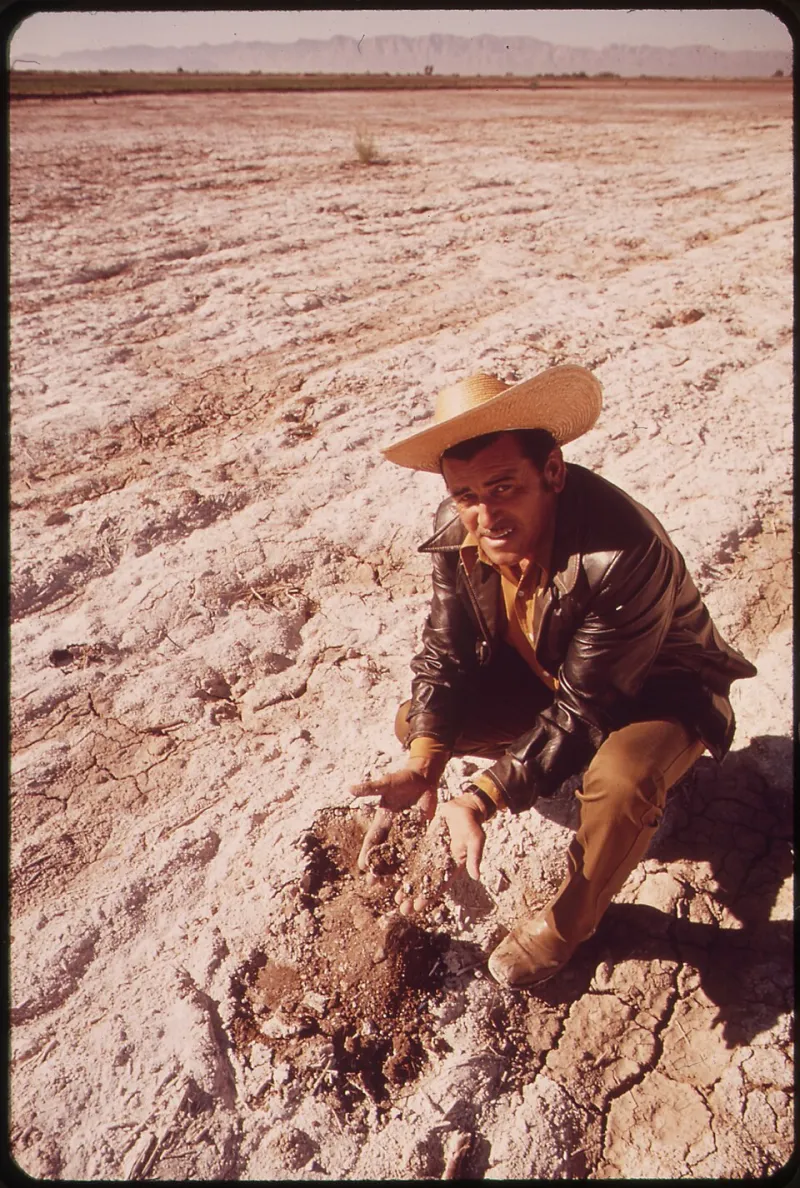
Photo: Charles O'Rear, Public domain, via Wikimedia Commons
Every agricultural organization we work with has the same problem in a different wrapper: genuinely impressive data that nobody outside the industry can feel. A 34 percent reduction in synthetic nitrogen over five years is a remarkable achievement. It is also, to a grocery shopper in suburban Ohio, a sentence.
The gap is not a data problem. It is a structure problem. Data becomes narrative when it is arranged the way humans have always arranged meaning — through character, tension, and change. Below are five structures we return to again and again when translating agronomy into story.
1. The Single-Grower Profile
The oldest structure in agricultural storytelling remains the most effective: one person, one farm, one honest arc. The power of the grower profile is specificity. Instead of "our member farms adopted cover cropping at scale," you follow a fourth-generation operator in Iowa through one planting season — the skepticism, the yield anxiety, the September walk through a field that holds water differently than it did three years ago.
The craft is in the details. What did the soil smell like after the first rain following a cover crop? What did the neighbor say? Technical metrics belong in the story as evidence, not as headline. The human thread carries; the data corroborates.
2. The Before-and-After Contrast
Some achievements are invisible because they are gradual. The contrast structure solves this by placing two moments side by side — the same field, the same farm, five years apart, photographed from the same fence post. Water infiltration tests, earthworm counts, and organic matter readings become dramatic when the reader can see the delta.
This structure works especially well for policy audiences, who need to justify programs with demonstrable outcomes. A state soil health initiative in the Midwest, for example, becomes far more fundable when presented as a two-panel story: the eroded draw in 2019, the vegetated waterway in 2024, and the numbers that explain the difference.
3. The Season-Long Transformation Arc
Where the grower profile is a portrait, the transformation arc is a documentary. Following one operation through a full growing season — planting decisions, mid-summer stress, harvest results — gives audiences a narrative spine they already understand from a lifetime of food and weather. Each data point lands as a plot development: the June soil moisture reading, the August pest pressure, the November yield map.
Serialized formats — a monthly email series, a short video chapter per season — build an audience that returns, which is precisely what most agricultural communications lack.
4. The Detective Story
Sometimes the most compelling structure is a mystery: why did this field outperform its neighbor by 12 bushels with 20 percent less applied nitrogen? Framing a technical finding as an investigation — hypothesis, testing, evidence, reveal — invites the audience into the scientific process rather than presenting conclusions at them.
This structure flatters the reader. It treats them as capable of following a line of evidence, which builds more durable trust than any claim of authority.
5. The Ripple Story
The final structure follows a consequence outward. A single no-till adoption decision affects soil structure, which affects water retention, which affects the stream at the property line, which affects the municipal watershed, which affects the drinking water of a town the farmer has never visited. Each link is a data point; the chain is the story.
Ripple stories are the native format of sustainability communications because they make interconnectedness literal. They answer the question every skeptical consumer silently asks: why should this matter to me?
Choosing the Right Structure
The structure should follow the substance, not the other way around. A certification milestone may not support a season-long arc but makes an excellent ripple story. A contested practice change may demand the detective structure precisely because it invites scrutiny rather than deflecting it.
Whatever the frame, one principle holds: find the person standing next to the data. Metrics convince committees. Stories convince people — and committees are made of people.