The Operator Veto: Why Sustainable Agricultural PR Fails Without Producer Buy-In
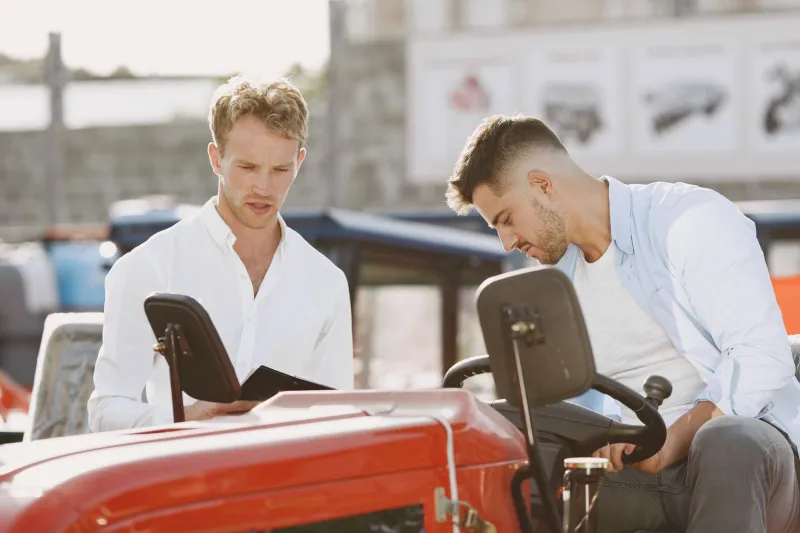
There is a moment that many agricultural communications professionals know well. The strategy deck is polished. The media targets are identified. The editorial calendar is set. And then a producer — the very person whose story is supposed to anchor the entire campaign — says no.
Sometimes the refusal is direct. More often, it is a slow withdrawal: unreturned calls, vague availability, a reluctance to appear on camera or speak to a journalist. The result is the same. The story that was supposed to demonstrate authentic, ground-level commitment to sustainable agriculture becomes a hollow exercise in brand management, built around stock photography and executive quotes rather than the lived experience of the people doing the work.
Understanding why this happens — and what to do about it — is one of the most consequential challenges in agricultural communications today.
The Trust Deficit That Predates Your Campaign
Producers who resist PR participation rarely do so out of obstinacy. In most cases, their reluctance is rooted in something earned: a history of being used as props in someone else's story.
Across the US agricultural sector, there is a long-standing pattern in which brands, retailers, and commodity organizations extract narratives from farmers and ranchers, package those narratives for consumer audiences, and then move on — leaving the operator with little control over how they were represented and no meaningful stake in the outcome. When a producer has watched a neighbor's operation get reduced to a feel-good video clip that misrepresented the complexity of their practices, skepticism is not irrational. It is informed.
This context matters because it means that a new communications initiative, however well-intentioned, arrives carrying the weight of previous failures. The communicator who does not acknowledge this history is working against a deficit they may not even know exists.
What Resistance Is Actually Communicating
When a producer pushes back on a PR plan, the instinct for many communications teams is to reframe the ask — to find a different angle, a lower-stakes entry point, or a more persuasive pitch. This approach treats resistance as a messaging problem when it is frequently a structural one.
Producer resistance often signals one or more of the following underlying concerns:
Loss of narrative control. Operators who have worked for decades to build a reputation within their communities are reasonably protective of how that reputation is managed. A PR campaign that positions them as a vehicle for a brand's sustainability story, rather than as an independent professional with their own perspective, threatens the autonomy they have worked to maintain.
Asymmetric risk exposure. A brand that publishes a story about a producer's regenerative practices and later faces scrutiny over those claims has legal and communications resources to manage the fallout. The producer typically does not. This asymmetry is rarely discussed openly, but it shapes how operators assess the proposition being put to them.
Philosophical misalignment. Many agricultural producers hold a deep skepticism of marketing as a practice. They may believe their work should speak for itself, or they may distrust the motivations of the organizations asking them to participate. Asking someone to become a spokesperson for a cause they have not fully endorsed is a request that deserves a thoughtful answer.
Building Alignment Before Building Content
The most effective agricultural communications strategies treat producer buy-in not as a deliverable to be obtained before the campaign launches, but as a process that shapes what the campaign ultimately becomes.
This requires a different kind of engagement at the outset — one that is oriented toward listening rather than pitching. Before a communications team presents a concept to a producer, they should be able to answer several foundational questions: What does this operator want people to understand about their work that they feel is consistently misrepresented? What aspects of their operation are they unwilling to have publicly characterized, and why? What would meaningful participation look like to them, and what would feel extractive?
These conversations take time and require a degree of candor that is sometimes uncomfortable for brands accustomed to controlling the narrative. But they produce something that scripted campaigns cannot: a story that the producer actually endorses, which is the only kind of story that holds up under scrutiny.
Structural Accommodations That Signal Respect
Beyond the initial conversation, there are practical mechanisms that agricultural communicators can build into campaign structures to demonstrate that producer autonomy is being taken seriously.
Review and approval rights. Giving operators the ability to review final content before publication is a minimum standard that many campaigns still do not offer. For producers who have been burned by previous misrepresentation, this is often the single most important factor in their willingness to participate.
Defined scope agreements. A written understanding of exactly how a producer's story will be used — which platforms, which audiences, for how long — reduces the ambiguity that makes participation feel risky. These agreements also create accountability for the brand, which is a feature rather than a liability.
Compensation and recognition. The expectation that producers will contribute their time, their stories, and their credibility to a communications effort at no cost is worth examining critically. In sectors where operator margins are already constrained, the implicit ask that they subsidize a brand's content strategy can itself be a source of friction.
When Alignment Is Not Achievable
Sometimes, despite good-faith effort, a producer and a communications team cannot reach genuine alignment. The operator's values may diverge too significantly from the brand's positioning, or the history between the parties may be too fraught to overcome in the timeframe the campaign requires.
In these situations, the appropriate response is not to proceed with a lesser form of participation — a quote pulled from an old interview, a photograph taken at a previous event — but to acknowledge the gap and reconsider the strategy. A campaign built on reluctant or coerced participation will not produce the credibility it is intended to generate. In some cases, it will actively undermine it.
The communicator's role in these moments is to advise the brand honestly: the story you want to tell is not yet the story you have earned the right to tell. That counsel may be difficult to deliver, but it is precisely the kind of strategic honesty that distinguishes communications work rooted in purpose from work that merely performs it.
The Compounding Value of Genuine Alignment
When producers do choose to participate — not because they were persuaded into it but because the campaign genuinely reflects their perspective and respects their position — the resulting content carries a different quality. It is specific in ways that fabricated authenticity cannot replicate. It holds up to the kind of direct audience questioning that increasingly characterizes consumer engagement with agricultural brands. And it tends to generate the most durable form of credibility: the kind that comes from people who know the operation well saying, without prompting, that the story got it right.
Building that outcome requires treating producer relationships as foundational rather than instrumental. It means arriving at the farm gate not with a pitch but with a genuine question: What do you want people to understand about the work you are doing, and how can we help you say it accurately?
That question, asked sincerely and followed with patience, is where effective agricultural communications actually begins.