Beyond the Checkmark: Why Agricultural Brands Must Build Their Own Credibility Infrastructure
Photo: President (1993-2001 : Clinton). White House Photograph Office. 1/20/1993-1/20/2001, Public domain, via Wikimedia Commons
There was a period, not especially long ago, when displaying the right certification seal on a product package or company website was sufficient to close the credibility gap with skeptical buyers. The seal signaled that a recognized third party had reviewed the operation, applied defined standards, and issued a judgment. For many audiences, that was enough.
That period has ended—or, more precisely, it is ending faster than most agricultural marketing strategies have adjusted to account for.
This is not an argument against certification. Third-party audits and standards programs remain valuable tools in the agricultural communications toolkit, and several of them represent genuine rigor. The argument, rather, is that certification alone has become an insufficient foundation for brand credibility in a market environment defined by skepticism, information overload, and a consumer base that has grown accustomed to reading behind the label.
The Erosion of Certification Trust
The data on consumer confidence in sustainability certifications is, at this point, difficult to dismiss. Survey research from across the food and agriculture sector consistently documents declining trust in third-party validators, even among consumers who actively seek out certified products. The reasons are not difficult to identify.
High-profile controversies involving certifying bodies—instances where certified operations were later found to be in violation of the very standards they had been approved against—received significant media attention and lodged themselves in public memory. The proliferation of certification programs, many with overlapping scopes and varying degrees of rigor, created a label landscape so crowded that meaningful differentiation became difficult for the average buyer to parse. And the structural limitations of certification—the fact that most audits are periodic rather than continuous, that standards are necessarily backward-looking, and that the certifying body is typically paid by the entity being certified—have become more widely understood.
None of this means that a USDA Organic seal or a certified non-GMO verification is without value. It means that the seal alone is doing less credibility work than it once did, and that brands which treat it as a destination rather than a starting point are increasingly vulnerable.
What Parallel Credibility Looks Like in Practice
The organizations navigating this environment most effectively are not abandoning certification. They are building alongside it—constructing what might be called a parallel credibility infrastructure that operates through direct stakeholder engagement, producer-level transparency, and honest communication about the boundaries of what any certification program can actually verify.
This infrastructure takes several forms, and the most effective deployments tend to combine multiple approaches rather than betting on a single channel.
Producer storytelling as verification. There is something that a third-party audit cannot provide that a farmer standing in a field and explaining her soil management decisions can: a human anchor for an abstract claim. When agricultural brands invest in surfacing the voices and experiences of the producers behind their supply chains—not as marketing decoration, but as substantive documentation of practice—they create a form of social verification that operates independently of any formal certification structure. Audiences who understand the agronomic logic of a practice from the person implementing it are far less reliant on a seal to tell them whether to believe it.
This approach requires meaningful producer relationships, editorial investment, and a communications philosophy that is comfortable sharing real complexity rather than polished simplicity. It is more demanding than printing a certification logo. It is also substantially more durable.
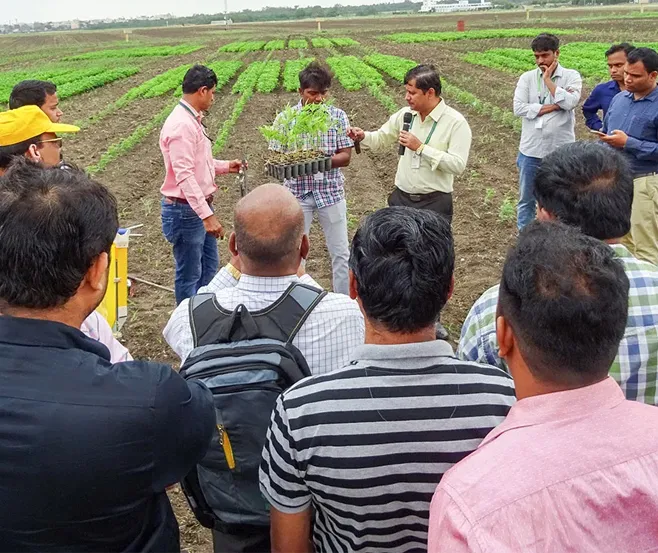
Participatory verification models. A growing number of agricultural organizations are experimenting with transparency mechanisms that invite stakeholders into the verification process rather than presenting them with its conclusions. On-farm open days, live-streamed field monitoring, publicly accessible data dashboards, and structured dialogue programs with retail and institutional buyers all represent versions of this approach. The common thread is that they reduce the distance between the claim and the evidence, allowing stakeholders to form their own assessments rather than relying entirely on a third-party intermediary.
These models require organizational confidence and a genuine willingness to be seen—including on the days when conditions are not ideal. That confidence is, itself, a credibility signal.
Radical transparency about what certification does and does not cover. This is the approach that most agricultural communications strategies conspicuously avoid, and it is arguably the most powerful one available. When a brand proactively explains the scope and limitations of its certifications—what the audit covered, how frequently it occurs, what it does not assess—it accomplishes something counterintuitive: it makes the certification more credible, not less.
Audiences who encounter a brand willing to say "this certification covers our input sourcing practices but does not address water management, which we are tracking separately through the following mechanisms" are encountering a level of institutional honesty that is genuinely rare. That rarity is, in the current communications environment, a differentiator.
The Brand Strategy Dimension
For communications and marketing professionals at agricultural organizations, this is fundamentally a brand strategy question, not merely a messaging one. The decision to build a parallel credibility infrastructure—or to continue treating certification as the primary trust mechanism—reflects a deeper organizational position on what kind of relationship the brand intends to have with its stakeholders.
Brands that invest in the longer-arc work of producer storytelling, participatory transparency, and honest certification contextualization are making a bet that durable trust is more valuable than efficient trust. They are choosing to build something that is harder to replicate than a label and harder to undermine than a single audit controversy.
In an agricultural sector where the stakes of credibility—regulatory, commercial, and reputational—are rising steadily, that bet is looking increasingly well-placed.
Moving the Conversation Forward
The certification fatigue that now characterizes significant segments of the food and agricultural consumer market is not a problem that any individual brand created, and it is not one that any individual brand can solve. What individual brands can do is choose to operate differently within it—to treat the checkmark as a floor rather than a ceiling, and to invest in the harder, more human work of building trust that does not depend on any single validator's continued reputation.
The organizations that will lead agricultural communications in the next decade are not the ones with the most certifications. They are the ones with the most credible stories—and the infrastructure to tell them.