The Interview You Should Expect: Preparing for the Five Hardest Questions in Agriculture Coverage

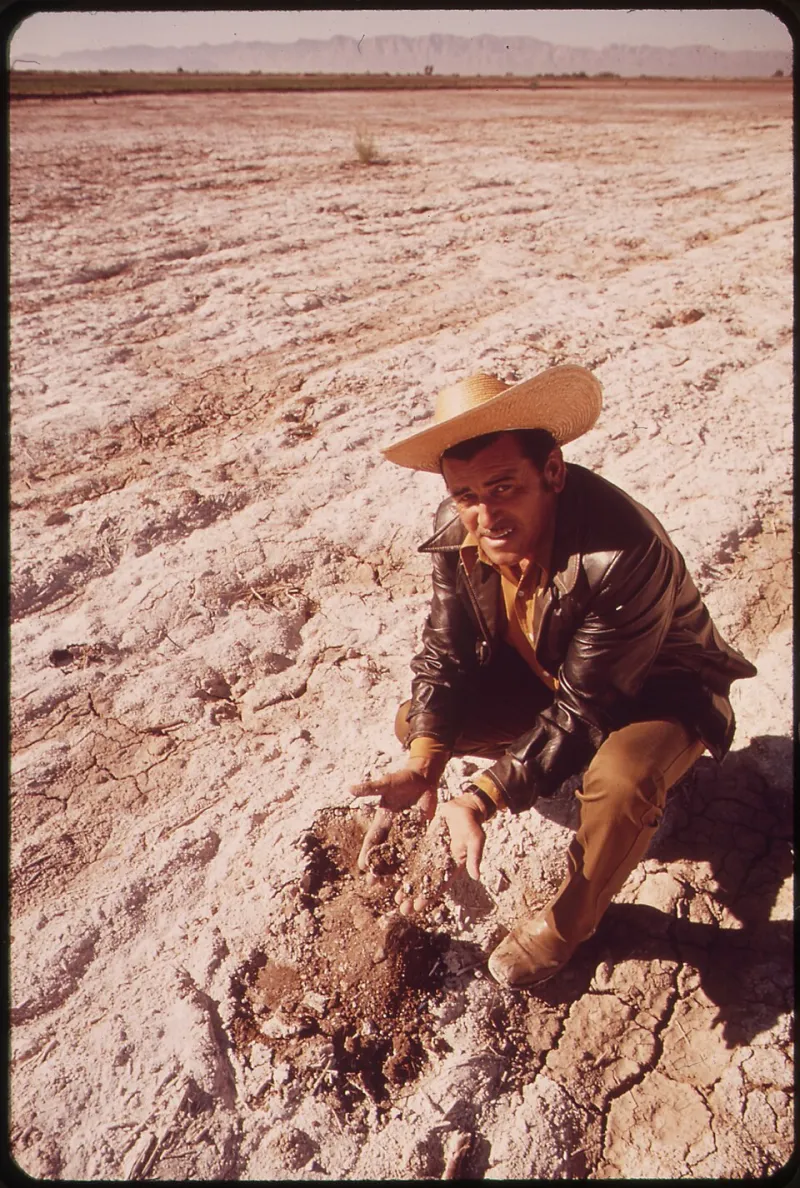
Photo: FreeRobertDaza, CC BY-SA 4.0, via Wikimedia Commons
Media training for agricultural leaders too often focuses on delivery — posture, sound bites, bridging phrases. But the real risk in a modern ag interview is not stumbling over a bridge. It is being unprepared for the substance. Reporters covering food, farming, and climate in the United States are better resourced and more skeptical than a decade ago, and they arrive with questions that have been sharpened by years of greenwashing exposés and supply-chain reporting.
Here are the five you should expect, and how to answer them without spinning.
1. "How are you managing input cost pressure — and who absorbs it?"
The trap: Talking about efficiency gains while dodging the distribution question. Audiences know cost pressure gets pushed somewhere — to growers, to workers, or to consumers.
The approach: Name the mechanism. If margins are compressed on your side, say so. If costs are shared through contract renegotiation, describe the terms honestly.
Weak answer: "We're always looking for efficiencies across the value chain."
Stronger answer: "Fertilizer costs are up roughly 20 percent year over year for us. About a third of that we've absorbed, a third is reflected in grower contracts that were renegotiated with input in mind, and a third flows to customers. I'd rather walk you through those numbers than pretend nobody's paying."
2. "What's your position on [specific chemical], and are you reducing use?"
The trap: Defending the product category in the abstract, or hiding behind "we follow all regulations." Both read as evasion, and the reporter already has the regulatory record.
The approach: Be specific about your own practice, your timeline, and your reasoning — including where you disagree with critics.
Weak answer: "All of our applications comply with EPA and state guidelines."
Stronger answer: "We've cut use of that product by about 40 percent over three years through scouting-based application and substituted integrated pest management on 60 percent of our acreage. We still use it where we believe the alternative causes more harm, and I'm happy to explain the agronomics of that decision."
3. "Who works your fields or facilities, and what are they paid?"
The trap: Pivoting to "we're a family operation" when the reporter has wage data, H-2A filings, or contractor records. Labor coverage in agriculture has hardened considerably.
The approach: Know your labor chain — including contractors — and be prepared to discuss wages, housing, and recruitment honestly. If there are known problems, acknowledging them with a remediation plan outperforms denial.
4. "Your carbon claim — can you show the methodology?"
The trap: Repeating marketing language. Carbon claims are now a legal exposure area under FTC scrutiny and state laws, and reporters know how to ask for the protocol, the baseline, and the third-party verification.
The approach: Have the methodology one click away. If a claim rests on modeled data or pilot programs, say so before you are asked.
Weak answer: "Our program is significantly reducing our carbon footprint."
Stronger answer: "That figure comes from a COMET-Farm model across 12,000 acres, with soil sampling on 15 percent of acres to validate. It's a modeled estimate, not measured on every acre, and we label it that way in our reporting."
5. "What happens to this land in 30 years?"
The trap: Treating stewardship as a values statement rather than a plan. The long-horizon question is increasingly common in coverage of land tenure, soil health, and water.
The approach: Talk in specifics — cover-crop acres, water rights, transition plans for the next generation, conservation easements. Concrete commitments, even modest ones, beat sweeping language.
The Common Thread
Notice what every strong answer has in common: a number, a mechanism, and an admission of limits. None of them are perfect. All of them survive a follow-up question, which is the real test. Spinning is not getting caught in a lie — it is giving an answer so polished that the reporter's second question is designed to break it.
The preparation that matters is not memorizing lines. It is sitting down before the interview and answering these five questions to yourself, honestly, with data. If you cannot answer them for yourself, you are not ready to answer them for a reporter — and in the current media environment, the interview will happen with or without you.